SERVICE 01 / ROUTE CONTROL

Rural equipment transport planning.

Build a usable movement brief before selecting a vehicle, route or loading arrangement. Planning is based on equipment facts, site conditions and the intended delivery window.

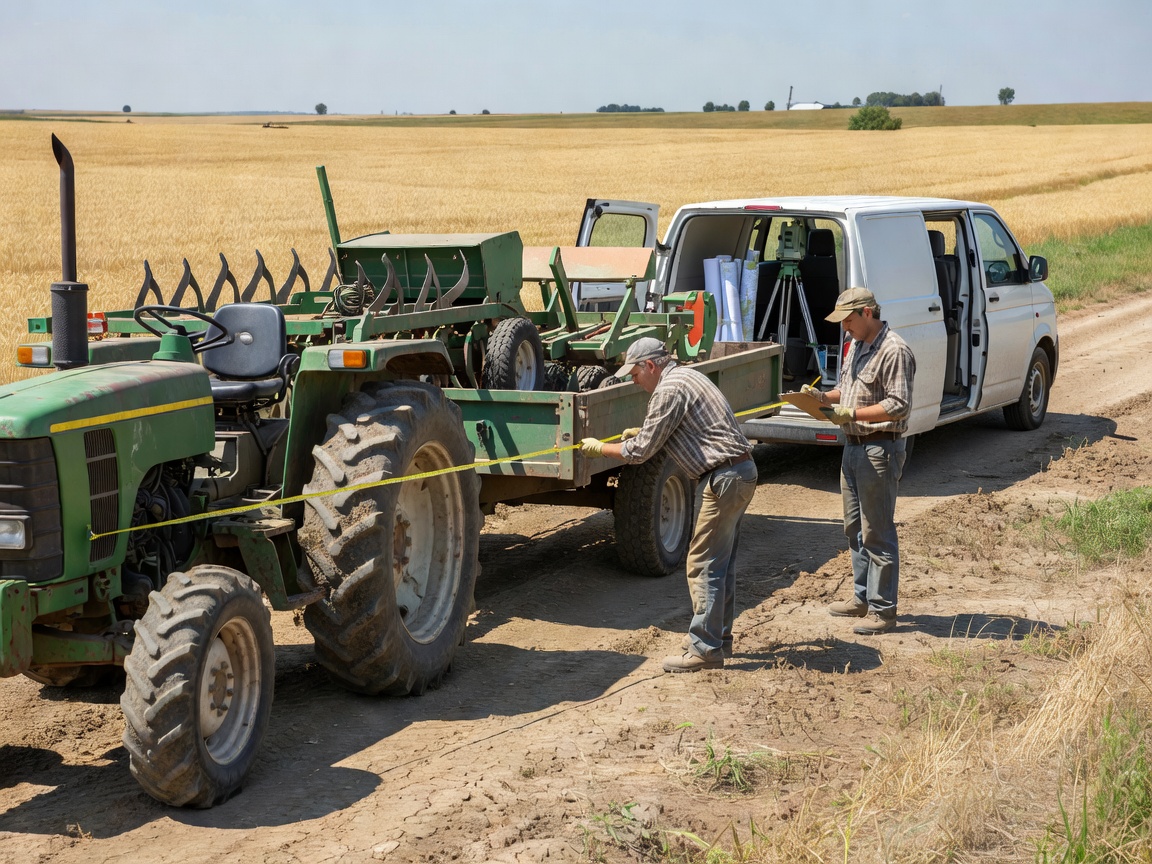
Agricultural equipment being measured for a rural transport plan

Start with the equipment.

Record overall width, height, length and weight information. Note attachments, raised parts, fragile components and current condition. A photograph set can clarify shape, access points and protection needs.

Transport method selection depends on those details. It also depends on route suitability, loading arrangements and the available delivery area. A broad category is not enough when dimensions change the route decision.

01 / ROUTE

Route suitability is a category, not an assumption.

Review road restrictions, bridge information, low clearances, restricted approaches and local access conditions as part of the route brief. Exact restrictions vary by country, road and vehicle. Current requirements should be checked by the responsible transport operator.

Farm access can be the controlling factor. A route may be suitable until the final gate, bend, surface or unloading area. Include collection and delivery approaches rather than assessing only the main road journey.

02 / SCHEDULE

Coordinate the handover.

Delivery windows should reflect site availability, loading readiness, weather exposure and communication between the parties. Avoid presenting an estimated time as a guaranteed arrival. Timing can change with route restrictions, traffic, site conditions or documentation.

Equipment condition also matters. Existing damage, loose parts and exposed components should be recorded before movement. Protection requirements should be agreed before loading is arranged.

Key planning points

Actual loading and securing must follow qualified procedures, equipment documentation and applicable requirements. Do not improvise lifting or restraint systems.